My grandparents on my dad's side of the family came to visit us when we lived out in the county near Willows, California in 1951 or 1952. I was six or seven years old. My parents and grandparents were out in the kitchen enjoying a drink, probably some sort of mixed drink. I remember it being dark outside when there was a knock on the door. It was a telegram delivered by Western Union to my grandmother. It was very uncommon to see an adult cry back in those days or show any emotions, except maybe anger. After my grandmother opened the telegram she went into the living room by herself and started crying. I walked up to her and asked what was wrong and she told me her sister in Canada has died. Without giving it much thought, I told her we are all going to die sometime. For some reason that brought a smile to her face. Years later, when I was older she reminded of that and how she thought it gave her a little joy during a sad time.
Friday, April 12, 2024
Wednesday, March 13, 2024
MOHS SURGERY
My appointment was at 9 am on Monday to have skin cancer, the size of a dime removed from my lower right leg. The biopsy, taken a month earlier, showed it to be basal cell cancer. After checking in at the front desk of the Advanced Skin Center in Roseburg, I was instructed to wait in the second waiting room until my name was called. Most the patients in the waiting room were old men, some with bandages on their noses, faces, arms and God knows where else. It looked like a room filled with the walking wounded. Mohs surgery involves cutting out the tissue with cancer, having it examined by the pathologist and if the edges of the tissue is free of cancer cells they stitch you up. If it is not clear of cancer cells more cutting is performed until it become clear. Some people could be in here all day. I have been through this procedure before and never had to go back for a second cutting. Medical staff personnel walked through the waiting room carrying towels, garments and other medical supplies. Soon a young woman, who was a medical assistant appeared calling out a name. Not getting a response she yelled out the name and an elderly man responded and off he went following the young woman. I got the impression some of these gentlemen had a hearing problem in addition to skin cancer. After waiting a half hour my name Mike was called out, and off I went to an examination room where the medical assistant introduced herself, asked a few question and proceeded to injecting a numbing substance around the area that would be removed. After a couple minutes she poked around the area asking if I could feel anything? It was totally numbed and off she went to get the surgeon. The surgeon looked like a man that had been up most the night, in desperate need of coffee with those big telescope lenses fasten to his glasses, like the ones a dentist wears. He was a man of few words as he put on rubber gloves, picked up a scalpel and quickly did his business placing the chunk of flesh in a glass container the medical assistant was holding. As he left the room he told me it would be an hour before he would have the pathology results done. I asked the medical assistant if he was the pathologist too, and she replied yes. He was a busy man and no wonder he looked tired. The medical assistant applied a pressure bandage to my wound after cauterizing it to stop the bleeding and took me back out to the waiting room.
While sitting in the waiting room for the results, an older couple sat down next to me. The man told me they had come all way that morning from Port Orford on the Oregon Coast. We got to talking as he told me they lived up Elk River, which I was very familiar with when I worked for the Forest Service in Gold Beach back in the 1980's. He mentioned a few names of people that I had known including some loggers. Soon his name was called and off he went. Then another man sat next to me asking if he was in the right room. I asked what he was here for and he did not seem to know. He had come from Cottage Grove and said he had been here before to have something on his face looked at. As we were talking I heard a man call out William, my first name which I usually don't respond too. Everybody looked around as nobody responded, until I asked what is the last name and he said Burke, and off we went to another section of the facility where I was told to my relief the tissue was clear of cancer. Here I was stitched up and a large compression bandage was applied from my knee down to my foot to keep the leg from swelling. I was instructed to keep the leg elevated for a few days and not to get the bandage wet for week. A real challenge for taking a shower. After going to the front desk for scheduling appointments for the bandage removal in a week and in two weeks for the stitches to be removed, I walked out the front door with a new lease on life or at least until next July, when I'm scheduled for my six month full body exam. I still wonder if that man from Cottage Grove ever found out what he was there for?
Saturday, November 4, 2023
MY DOG JACK
It was a late November afternoon in 1989 when I was about ready to leave work at the Cottage Grove Ranger District office and go home to a little house I rented on Lynx Hollow Road north of Cottage Grove. No sooner than I started packing up my things to head out the door when a woman that worked on the road maintenance crew came up to me asking if I would take a puppy they picked up walking along a forest road where it was beginning to snow. She knew I had just put my old family dog Corky to sleep because of health issues. She said she could not take the dog because they already had some dogs. So I went home with the little black puppy that looked more like a cub bear that I named Jack.
There was a storage room in the back of the house where I left Jack during the day with food, water and a partially opened window as I went off to work. When I came home at night I let Jack out in the back yard and he had free range in the house at night. One wall of the storage room had unpacked boxes of items from the house I sold in Gold Beach in 1988. After a few weeks I noticed Jack was in a corner of the storage room as if something had been bothering him during the day. One day I saw a wild cat jump in through the opened window and discovered she had a litter of kittens in one of the boxes. Jack had become accustomed to this wild cat coming and going as she raised her kittens. Later I discovered the after birth in the box where she had the litter. The wild cat and her kittens left the house to live in the barn behind the house and roam the nearby fields for rats or other small varmints. In 1991 I bought a house in south Eugene in order to allow my two children to live with me on a part-time basis while they were in high school and their mother was considering moving out of the area. Jack was two years old and I constructed a fenced yard with a dog house where he stayed when I was working in Cottage Grove. Over the next few years Jack went on many hikes, backpacking trips and in the Fall of 1997 went on a cross country car trip with me to visit a sister living in Indiana. When Celia and I bought a house in Cottage Grove and got married in 2000 Jack became part of the family. Jack was susceptible to seizures and in 2005 we had to send him over the Rainbow Bridge due to failing health.
Sunday, July 16, 2023
THE ICO"S OF AGING
The Issues, Concerns and Opportunities (ICO'S) of aging can be many, some good and some not so good. Much depends on how well we took care of ourselves in our younger years, family history, the relationships we maintained over the years and the new relationships we develop.
With old age and living alone comes a sense of freedom limited by health issues and financial means . One big side effect of living alone is loneliness. Over time one becomes stuck in their ways and the thought of finding another partner seems unfair, not practical and slowly fades away. What Celia and I had together can not be replaced. Over 20 plus years we grew together, respecting each others routine and accepting the lifestyle we both developed. That does not disappear abruptly after her departing this world over two years ago, but over time somethings change and I get into my own rut. Hard to imagine another woman putting up with me now at this stage of life.
Like Katherine Hepburn said, " men and women are not meant to live together, just occasionally visit."
Friday, December 23, 2022
CHRISTMAS 2022
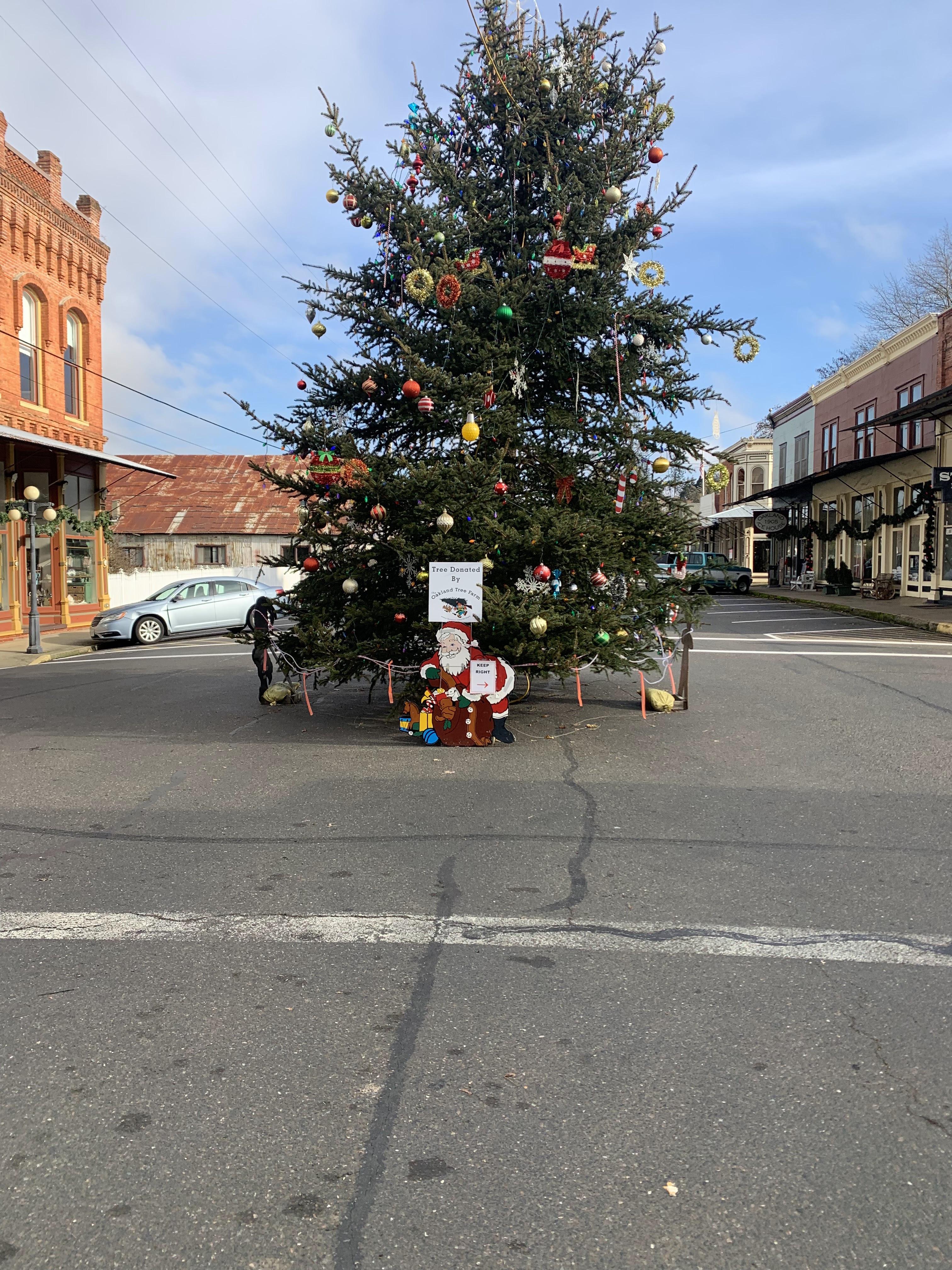
It's that time of year to be jolly, get into the holiday spirit and overlook family dysfunctions. In my old age I feel more like scourge this time of year, but getting gifts for the grandchildren saves me from total despair. One habit I have taken up over the years of living here is to take a picture of the Christmas tree standing in the middle of Oakland, and sending it out by email to family and friends in place of Christmas cards. Sure saves on postage and a good way to get a response from old friends and distant relatives scattered across the country.
Wednesday, November 23, 2022
THE FINAL DEED
This task is one I have put off for some time thinking I will get to it tomorrow, then another year goes by. We all live in denial about when the end might come. I'm not sure how many times I have sent off for literature on the topic of what I want done after I depart this world to save my children from dealing with it all. In many ways it is unbelievable that we have to buy a one way ticket to leave this world in peace. Two things for sure in this life are death and taxes. The other day a representative with the Neptune Society called me based on information I requested and talked me through the process, informing me of discounts and benefits for being a veteran, plus allowing monthly payments with no finance charge. It was painless. First of all, he asked me if I had access to my email account on my phone and I replied yes, but first let me find my phone, then I realized it was in my hand. He did not comment, but probably thought this guy could go at any minute. I could only laugh at myself. After it was all said and done I asked the question, "what happens if I die before the balance is paid\off?" He replied that my children would be charged the balance. Don't worry kids, I plan to pay it off soon. The peace of mind is worth it.
Saturday, July 30, 2022
SIGNS OF GETTING OLD
With the recent hot weather it has become necessary to retreat indoors in the afternoons when temperatures are pushing or exceeding the triple digits. Usually during this time I strip down to my t-shirt and shorts, start to read and drift off to sleep. The other day I had gone off to never, never land and awoke to the sound of the UPS truck driving up to the front of the house. Waking up in a daze I stumbled out the front door to meet the lady driver before realizing I had no pants on. She handed me the package looking a little stunned, muttered some words, got back in the truck and quickly departed. I returned indoors and could only laugh at myself, thinking that poor woman!
Sunday, March 28, 2021
THE SON OF MOE
Monday, February 8, 2021
Wentworth Springs
Have any of you folks from California ever been to Wentworth Springs on the El Dorado National Forest? It was my first camping trip in the 1950's with my dad and another family from Willows. We drove to Georgetown then followed a single lane dirt road to the end, where there was a building that may have been a store and maybe a hotel. We camped along a stream, sleeping on old bed springs, no tents, some picnic tables and wooden boxes nailed on trees for storing dishes and food. We spent a day hiking to Loon Lake where I remember a dam constructed out of blocks of granite with many leaks. Somebody said it had been built by the Chinese. The landscape was mostly granite with scattered trees. I have tried to follow it on Google Earth and don't see what I remember. Funny what we think about in our old age.
Wednesday, July 29, 2020
Doctor Visits
With age come health issues and a regiment of pills. Must have started when I turned 50 with high blood pressure. Then came high cholesterol and high triglycerides and more pills. Now I have pills in the morning to get me through the day and pills in the evening to get me through the night. In addition to my primary care doctor I think I have been to every medical specialist there is, some more than once. Can’t name them all here, besides don’t know how to spell all the different specialties, and the spell check doesn’t know either.
The
dermatologist is one I see regularly or at least three or four times a year and
can even spell it now. Skin cancer
reoccurs with me almost on a daily basis.
There always seems to be a new barnacle sprouting up somewhere on my old
body, always something new to look at in the mirror each morning. Every visit is the same old routine; spray on
the liquid nitrogen, biopsies a few suspicious looking things and complete
removal of others. Sometimes I feel
like I lost a pound of flesh when I leave the place. They
place pressure bandages on my face, arms, sometime on my ears making me look
like I’m leaving a war zone. There were
times they asked me if it would be all right if some young interns can watch
the examination for training purposes, which I agreed to. Being almost naked as the doctor points out
this and that to the interns while I’m feeling like a specimen in a lab. Maybe I can have my body pickled after
death and sent to a research lab for all to see and study. Would
not have to worry about burial or cremation expenses.
Then comes
the pathology report with all kinds of words only a doctor can understand. Why can’t they just tell me that one was a
good barnacle and that one was a bad barnacle?
The more they apply the nitrogen and the more cutting the higher the
bill. They all seem to smile when I enter
the office as I can imagine they all get a big bonus in pay when I come
in.
With all the
years of working outside with no protection from the sun I’m now paying the
price. Hopefully the younger generation
can learn from my mistakes and avoid the pain, expense and scares later in
life.
Sunday, May 17, 2020
Looking Back for Tomorrow
Except for an occasional visit with neighbors or a trip to the store, this computer has become our primary connection to the outside world where we can share our thoughts and experiences. Attached is a short essay we can all relate to and ponder.
Map
collecting has been a hobby of mine ever since my school days. Remember those state maps you could get at
the gas station back in the 1950’s and 60’s for free? I still have some, plus maps from National
Geographic, National Forests, Parks and my share of atlases. Now we have Google Maps and Google Earth to
find all those places we want to explore.
With no place to go these days I
can travel back in time by sitting and looking at the computer screen in
search of where we traveled, backpacked and
worked over the years. Some of those
places are hard to find, especially the many forest roads I have traveled and
trails I have hiked. Some of those
roads are no longer maintained, the clear cut units we used as landmarks are
now second growth forests, some are over 40 years old and many places,
including wildness areas, have been burned.
The natural topography is still there, the streams, the ridges and the
mountain peaks, but not the way we remember them due to fires that have altered
the landscape.
In midst of
a world-wide pandemic, a changing climate, political chaos and an unknown
economic future we don’t know what is down the road of life. There
are no maps charting the future course. History can be our greatest teacher as we look
back in time and learn from our mistakes.
Humanity has survived two world
wars, the Spanish flu of 1918-19 and the Great Depression of the last
century. The great question is did
humanity make the right choices after all those events? Were they good only in the short-term and harmful
in the long-term?
Hopefully we
all survive this crisis and become more understanding of each other, our
environment, and develop an economy that is more sustainable for future
generations. The natural world is constantly changing and
we better adjust no matter how much we think we can change Mother Nature. We have tried for generations with little
success, causing more harm than good. Who
knows what the future has in store for mankind? One thing for sure, I don’t think we will see
those free maps at the gas station ever again.
Tuesday, September 3, 2019
Laird Logging
Gold Beach Ranger District
Siskiyou National Forest
During the
1970’s and into the 1980’s Laird Logging was the second largest logging company
in Oregon after Huffman and Wright Logging based in Canyonville. Laird was based in Gold Beach and was the
principal logger for Champion International Corporation, which had a large
plywood mill there along with extensive timber lands. Laird had his shop, equipment yard, and fleet
of yellow log trucks on property owned by Champion next to the mill. In addition to his fleet of trucks, he had
three yarders, logging tractors, mostly Cats, road construction equipment and a
helicopter with a pilot.
Laird’s first name was Shirley. He had been raised in the Coquille Valley,
south of Coos Bay. His dad had been a
logger and Shirley spent many years working for him and eventually inherited
the logging company. Shirley had a rough
voice and reminded me of a drill sergeant I encountered when I went through basic
training in the Army. Shirley’s voice
was always noticeable while talking over the Curry County radio system, which
most loggers as well as Forest Service personnel had while dealing with timber
sales. He would not hesitate to chew out
one of his own employees over the radio, which we could all hear. It was never pleasant. Shirley had been a Marine during the Korean
War and in many ways was still fighting the war. He carried a hand gun in his pickup because
as he once told me he did not trust some of his employees. Due to a labor shortage in the area some of
his employees were inmates from the local county jail under a work and release
program, where they were picked up in the early morning and returned to jail
after a hard day’s work in the woods. Shirley usually kept one yarder and some
tractors busy logging on Champion’s land.
His other two yarders were used
on Forest Service timber sales purchased by Champion on the three Westside Ranger
Districts of the Siskiyou National Forest, including Powers, Gold Beach and the
Chetco Districts. When Champion did not
keep him busy he would bid on jobs for South Coast Lumber Company with a mill
in Brookings. His equipment was good--
you seldom saw any broken-down piece of machinery in the woods with Shirley Laird’s
name on it. Even his fire trucks were
top notch, in contrast to some loggers who put these on the bottom of their maintenance
list.
In my years
working as a timber sale contract administrator on the Gold Beach District from
1979 to 1988 I had four timber sales for which Shirley Laird was the contract logger. The
first was the McLobster Sale, purchased by Champion with 12 million board feet of
timber consisting of five clearcut units ranging in size from 20 to 60 acres in
the head waters of Lobster Creek, a fish-bearing stream that drained into the
Rogue River about 10 miles up from Gold Beach.
Some of the riparian buffers
along the stream below these units were inadequate because they did not provide
the necessary protection required by the stream protection provision of the contract. There were slopes exceeding 100% or greater
than a 45 degree angle and many of the large trees on these slopes would have
ended up in the stream after being felled.
By contract modification,
requiring agreement by both Champion and the Forest Service, these buffer areas
were extended upslope from the stream by 100 to 200 feet depending on the
terrain. This deleted an estimated
amount of timber from the original sale volume which had to be made up by
adding an additional 20 acre unit on the sale area under the modification
agreement.
Laird logged
with two yarders, one being a 110-foot tower on a Skagit yarder reaching out
2500 to 3000 feet with the skyline cable to achieve the necessary log
suspension for soil and stream protection.
A motorized carriage was used to yard one to four logs at a time
depending on the weight of the logs.
This system employed four men on the landing, a yarder engineer, a log
loader operator and two men, called chasers, that released chokers, cut limbs
off logs, branded and painted log ends.
Usually six men worked in the brush on the rigging crew, including a
rigging slinger supervising 3 or 4 choker setters and the man in charge of the entire
operation, called the hook tender, whose name was Jack. He was a tough supervisor and it was common to
hear him yelling at the rigging crew from the landing. If a man got fired or quit on the job he had
to ride in a logging truck back to town.
It was very dangerous work and accidents were frequent, sometimes
fatal. There were incidents when Laird’s
helicopter was used to move injured people from the woods to the hospital in
Gold Beach. The helicopter also was used at times to fly cable from the yarder
to the other slope beyond the clearcut unit to save time of rigging cables on
the ground by hand. There was a water
bucket available for fire suppression if needed. Also, the helicopter was made available to
the entire community for emergencies.
Laird use to
employ a cage that would hook to the carriage to transport the rigging crew out
of the unit at the end of the day. This
practice stopped after a near-fatal accident where the yarder engineer was not
paying attention and the cage flipped over the skyline. This practice was not looked upon highly by the
state health and safety people either, and after that one incident the crew
preferred to walk out at the end of the day, for their own survival.
The other
yarder Laird used was a 50-foot swing boom using a running skyline system
reaching out 800 feet to complete logging out the upper corners of the
units. The hook tender for this
operation was Pete, a quiet man, who seem to be suspicious of his crew and kept
a low profile.
Like most
loggers Laird’s priority was to get as many loads a day off the landings as
possible; any other work requirements were secondary. In order to keep up with erosion control and
slash piling requirements it was customary to allow the logger no more than
three landings pending completion of cleanup work before moving to a new
landing. Laird had pushed the limit as
he was moving to his fourth landing leaving three with uncompleted work. The logging manager for Champion had been
notified of this non-compliance. The
remedy was simple; the logging manger took away the log branding hammers for
both yarders and told Laird he could have them back when the Forest Service was
happy again. After two days of no
hauling while doing the required work Laird went back to logging.
All logs
required a brand, assigned by the purchaser on each log end to identify them as
to what sale they were from for log scaling and payment purposes; also, loggers
and sub-contractors were paid according to the log scale. A spot of yellow paint was also required on
one log end for export control since no National Forest logs were allowed to be
exported, except for Port Orford cedar which did not have a domestic market at
the time.
At least
once a week log trucks were inspected as they left the sale area for branding,
painting and load receipts. If loads
were found to be in non-compliance they were parked until the situation was
corrected. This usually involved a
person leaving the landing with a branding hammer and can of yellow paint. This definitely slowed down production and
got the logger’s attention quickly. Laird could hear the truck driver call back to
the landing over the radio for someone to come and brand and paint logs. Laird would enter the conversation with his
rough voice in frustration with it all. It would not take him long to be on the job
giving some people on the landing his advice on what they should be doing or
else, and it was never a friendly exchange.
One of my
most memorable encounters with Laird was on the Camp Victoria sale where he was
logging for South Coast Lumber. The
crew operating the 110- foot tower had completed yarding operations on one unit
and moved to another unit leaving a mountain of slash on the landing. Pete, the hook tender of the swing boom yarder,
was ready to move on to this landing to complete yarding the upper corners of
the unit. He called me on the radio
telling me he could not operate with all the slash piled on the landing and was
going to push it over the side into the unit with a bulldozer. I arrived on the landing and said he could
not do that. At the moment we both looked down the hill to see a cloud of dust
behind Shirley’s pickup truck coming toward us.
Pete replied to me, “Well, let’s see what Laird has to say about it.”
Shirley jumped out of his truck and wanted to know what the holdup was. Pete told him the situation with the slash
and Shirley said to push it over the side.
Pete replied that the Forest Service wouldn’t allow that. Laird turned to me and barked, “Then what
should I do with it?” I told him if he
pushed it over the side he would have to yard it back up and pile it again or
he could burn it under a permit. Laird
elected to burn it, so I requested a burning permit over the radio from the District
fire management people which they granted with the condition that Laird provide
two fire trucks on the job with a hose lay around the pile. He agreed, got two fire trucks and put his
crew to work laying out fire hose and wetting down the area around the pile as
it started to burn. About an hour into
the job one of the pumper engines ran out of gas. Since all the crew was busy I took it upon
myself to fill the tank from the five gallon gas can provided on the fire
truck. Just as I was getting ready to
pour the gas into the tank Laird came up from below the landing yelling, “Don’t
do that!” He told me he had put sugar in all the extra gas tanks because he
thought employees were stealing gas from him.
He had some good gas in his pickup that was used and in the end all that
slash went up in smoke with no spot fires.
The big
Skagit yarder was moved to a long clearcut unit and after yarding the first sky
line road reaching out 3000 feet Jack, the hook tender said he could not find any
more adequate tail hold trees on the far slope across the stream below to
anchor the skyline to. After looking
into this I agreed and permitted him to use the north bend system which involved
leaving the skyline in place on the first road and highlead yard to it. When I returned to my pickup to write up the
agreement for this change in yarding systems I went to place a copy in Jack’s company
pickup. Upon opening the door I noticed somebody
had left a BM on the driver’s seat! I
did not hang around to see what was said at the end of that day.
By 1984-85
Champion had cut all the mature timber on their lands and could not compete
with other purchasers for National Forest timber sales under a declining lumber
market and the mill was closed. Laird
was out of a job and had to close up shop and move. He moved his entire operation to Lakeside,
north of Coos Bay where he went to work for International Paper Company until
they closed down a few years later.
Laird retired after that, sold most of his equipment, laid off his
permanent employees and moved back to Gold Beach.
By the end
of the 1980’s other mills were closing due to an inadequate log supply,
conflicts with labor unions or the decision by corporate boards to move operations
to southern forests in the U.S. where there were second growth plantations
ready to harvest. It was the mill and
logging employees that got the short end of the stick with no pensions and no other
jobs to go to in their small communities.
Some relocated to other areas for work, some qualified for job training programs
at local community colleges and some could not cope with the change, like Pete
the hook tender, who committed suicide.
Laird died in 2002 at the age of 72 and was
buried with full military honors as a Marine Corp staff sergeant.
Today the
only remaining mill on the south coast that I know of is South Coast Lumber. All
the others are gone, including Champion, Moore Mills, Rogge Lumber, Westbrook,
and Georgia-Pacific. The Siskiyou National Forest is now combined
with the Rogue River National Forest and the Chetco Ranger District has been
consolidated with the Gold Beach District.
The timber management and engineering staff now is only a small fraction
of what it was in the 1970’s until the 1990’s.
For example, there was a Westside Engineering office north of Gold Beach
which closed sometime in the l990’s. It had 50 to 60 permanent and seasonal
employees serving the three westside Districts doing road surveys, design work,
construction inspection and road maintenance consisting of graders, dump
trucks, backhoes and other equipment.
It is all
history now.
Monday, July 30, 2018
The Marvels of Aging
Now that we are advancing in age we want to share the following to let you know what to expect in your golden years.